
A Center for Amplifying Neurodivergence, Creativity, and Liberation
About the BYPO Institute
The BYPO Institute is a collective of professional mental health experts, community organizers, and diverse artists who collaborate across their respective areas to create new and radical approaches to mental wellness, social and political activism, and creative expression.
This is a new project dedicated to fusing divergent routes to social transformation. Our mental health work explores interdisciplinary approaches to amplify healing for individuals who are struggling as well as their family and social systems. Arts organizing and event promotion are ways of enhancing the best of our collective efforts to advance collective liberation,
BYPO Leadership
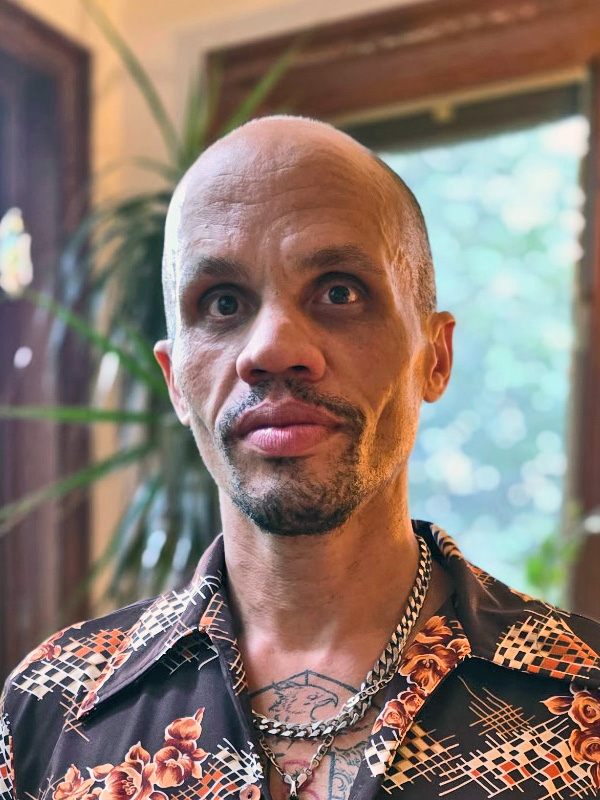
David Thurston is the founder of the BYPO Institute. He is a mental health professional with lived experience navigating the manic depressive spectrum. David has a background in arts organizing and in many arenas of social justice work. David also creates poetry using the moniker BYPO PHOENIX. His work can be seen at byporevolution.com
Mental Health Strategy
The BYPO Institute focuses on modern strength-based approaches to social work and mental health treatments for common diagnoses.
The Institute offers peer-support training, coaching, and connections to help deal with a range of mental health challenges.
By approaching mental health through the framework of personalized strategies, the BYPO Institute recognizes that multiple parts of a social system need to change in order for individuals to find recovery and resilience. The BYPO institute specializes in handling complex cases.
Explorations of Mental Health
David Thurston writes extensively on mental health issues. The following are some of his reflections on mental health.

MOOD FOLLOWS ACTION: tools for moving through depression
Depression can be a demon. Andrew Solomon famously described it as the “Noonday Demon”—a beast that can leave you miserable even though you are held in positive relationships, or surrounded by an idyllic environment.
Depression can be toxic, but it is also a pervasive fact of life. There is no clear dividing line between depression that is brought about by challenging or traumatic circumstances and depression that is neurochemical or biological in origin. This essay will explore tools for working through depression and also ask what we can gain from the process.

A MANUAL FOR MANIA: reframing the spectrum
Navigating the manic depressive spectrum is profoundly challenging. Much has been written about this condition, dating back to ancient civilization. Many who live with its tumultuous vagaries have written memoirs and monographs. These stories have humanized our experience and offered shared language for understanding this path.
Yet the overwhelming paradigm in writing on this spectrum is one of pathology. The range of possibilities that manifest are described as ‘disorders’ that reify limits on life’s possibilities. The psychotic extremes of the condition are seen as utterly terrifying and unmanageable, tolerable subject only to aggressive psychotropic intervention.

WORKING WITH BORDERLINE PERSONALITY DISORDER
Borderline Personality Disorder (BPD) is among the most stigmatized mental health conditions. People living with it are often written off as hopelessly psychotic and difficult to be around. In my experience though, it can be managed, and the loving core of people living with BPD can emerge in amazing ways. If you know someone who you know has the diagnosis, but especially if you are romantically engaged, knowing a bit about the condition will help you set healthy boundaries and give you the best chance of developing a relationship that is safe for both of you.

IS DEPRESSION A FORM OF ADDICTION?
Earlier this week an unusual line of analysis came through me. I started to wonder if addiction might be a useful lens for understanding depression. Depression is a profoundly painful experience. But could it be addictive? Could this lens help people move through depression and heal?
I am influenced by a book called ‘Existential Kink.’ Carolyn Elliot explores how the subconscious mind actually enjoys patterns we perceive as undesirable. If we are often broke close to the next payday, do parts of us enjoy it? Why do we shuttle between serial toxic relationships? Elliot explores how examining this kink for emotional or material pain can help us release.
Arts Organizing
Art is integral to the BYPO Institute’s mission. Beyond the use of artistic expression as a method of mental health treatment, the BYPO Institute maintains a network of skilled artists that specialize in a variety of formats and mediums.
The Institute offers:
- Professional artists for digital, print, and street art installations at any scale
- Experienced street teams to promote actions and events
- Art project management to provide skilled interfacing between artists and organizers for large-scale installations
- A core focus on social justice organizing and messaging


Event Promotion
The BYPO Institute was borne of the streets. With decades of experience around community organizing, grassroots campaigning, and engagement cultivation, the BYPO Institute can help craft and amplify your message across physical and digital spaces.
The Institute offers:
- Skilled street teams for outreach and public engagement
- Trainers with expertise in using social media to maximize reach
- Deep relationships with local organizers in the D.C. metro area to help cross-promote and coordinate large events
Contact Us
Please use the form below to learn more about our services, or for general questions. You may also email us directly at info@bypo.org